
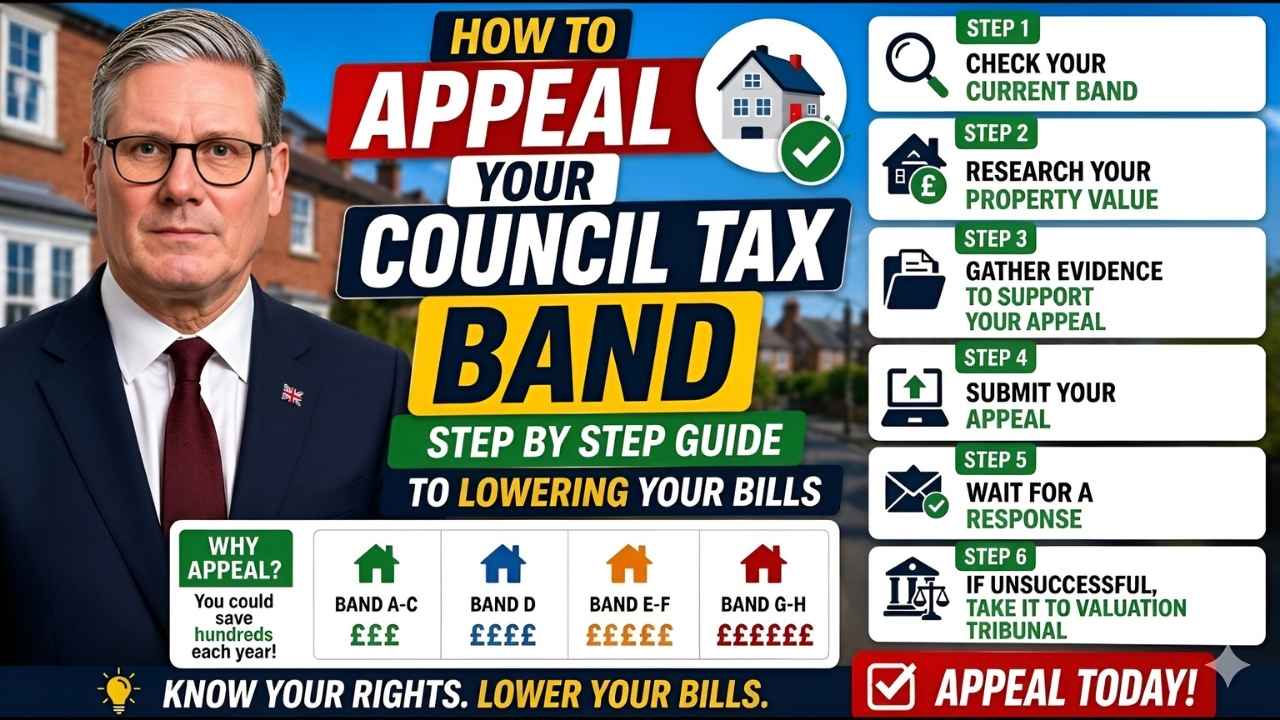
Millions of households across the UK pay council tax every year without ever checking whether their property is placed in the correct valuation band. What many people do not realise is that thousands of homes are still incorrectly banded decades after the original assessments were carried out. If your property has been placed in a higher band by mistake, you could be overpaying by hundreds of pounds every single year.
With living costs rising and household budgets becoming tighter, reviewing your council tax band is one of the easiest ways to potentially reduce monthly expenses. A successful appeal can lower your future payments and in some cases even result in a refund for previous overpayments.
Many homeowners and tenants assume the process is complicated or unlikely to succeed. In reality, checking your band and challenging an incorrect valuation is simpler than most people think. Understanding how the system works and knowing what evidence to collect can dramatically improve your chances of success.
What Is Council Tax and How Are Bands Decided
Council tax is a local tax collected by councils in England, Scotland, and Wales to fund public services such as waste collection, schools, street maintenance, and emergency services. Every residential property is placed into a council tax band based on its estimated market value.
The important detail many people overlook is that these property valuations were originally based on prices from 1991 in England and Scotland, and 2003 in Wales. Since then, housing markets have changed significantly, and many properties may no longer fit their original category accurately.
Properties are grouped into bands ranging from A to H in England and Scotland, while Wales includes Band I as well. The higher the band, the more council tax you pay annually.
Even a single band difference can mean paying several hundred pounds extra each year.
Why So Many Homes May Be in the Wrong Council Tax Band
When council tax was introduced, authorities had to value millions of homes in a very short period. Because of this rushed process, many properties were estimated using incomplete data or external observations instead of full inspections.
Common reasons for incorrect banding include:
- Similar neighbouring homes being placed in lower bands
- Property sizes being incorrectly recorded
- Clerical or administrative mistakes
- Home alterations not being assessed properly
- Incorrect assumptions about market value
In many areas, neighbours living in almost identical homes can still pay completely different council tax rates simply because nobody challenged the original assessment.
How to Check Your Council Tax Band
The first step is to compare your property with similar homes nearby. If neighbouring houses with similar layouts and sizes are in lower bands, there may be grounds for an appeal.
You can check your band using the official government service here:
Check Your Council Tax Band on GOV.UK
Look carefully at nearby properties that are:

- Similar in size
- Built around the same time
- Located on the same street or estate
- Structurally similar to your home
If several comparable homes are in lower bands than yours, it may indicate that your property has been incorrectly classified.
Signs You Could Be Overpaying Council Tax
There are several warning signs that suggest your council tax band may be too high.
One major clue is if your monthly payments seem noticeably higher than neighbours living in similar properties. Another sign is if your property has not been significantly renovated or extended but still falls into a much higher band.
You should also investigate if:
- You recently moved into the property and suspect the valuation is outdated
- Previous owners never challenged the band
- Your home was converted into flats or altered years ago
- Nearby homes sold for similar values but remain in lower bands
Even newer properties can occasionally be incorrectly assessed due to administrative errors.
How to Appeal Your Council Tax Band
If you believe your band is wrong, you can formally challenge it through the Valuation Office Agency in England and Wales or the Scottish Assessors Association in Scotland.
The process generally involves:
- Gathering evidence from neighbouring properties
- Comparing historical sale prices
- Explaining why the current band appears incorrect
- Submitting an official challenge online
The government first encourages taxpayers to request an informal review before making a formal appeal. In many cases, issues are resolved during this early stage.
Official challenge information is available here:
Challenge Your Council Tax Band on GOV.UK
The more organised your evidence is, the stronger your case becomes.
What Evidence Helps an Appeal Succeed
Successful appeals usually rely on strong comparisons and factual information rather than personal financial hardship.
Useful evidence includes:
- Neighbouring properties in lower bands
- Historical property sale values
- Floor plans and measurements
- Estate agent valuations
- Proof of incorrect property details
Photos and documentation showing similarities with lower banded homes can also strengthen your argument.

Many successful claimants discover errors simply by comparing official records carefully.
Can Your Council Tax Band Increase After an Appeal
One concern many people have is whether their band could rise instead of fall after a review.
Technically, yes. If authorities discover your property is undervalued, they can move it into a higher band. However, this is relatively uncommon when homeowners perform careful research before submitting an appeal.
Most people who challenge their band do so because they have already identified clear inconsistencies with neighbouring properties.
Still, it is wise to check surrounding homes thoroughly before proceeding.
How Much Money Could You Save
Savings vary depending on your location and current band, but even a one band reduction can lead to significant financial relief.
For example:
- Moving from Band D to Band C may save several hundred pounds annually
- Backdated refunds can sometimes cover years of overpayments
- Lower future payments improve monthly affordability
For households already struggling with rising bills, these savings can make a noticeable difference.
Some homeowners have reportedly received refunds worth thousands of pounds after successful reassessments.
Who Can Appeal a Council Tax Band
You may be eligible to challenge your council tax band if:
- You are the property owner
- You are a tenant responsible for paying council tax
- You recently moved into the property
- You believe there has been a significant valuation mistake
There are also specific time limits for formal appeals in certain situations, especially after moving into a new home. However, informal reviews can still be requested even if those deadlines have passed.
Common Mistakes to Avoid During the Appeal Process
Many appeals fail because people rely on emotional arguments rather than objective evidence.
Avoid these common mistakes:
- Complaining only about rising living costs
- Submitting appeals without comparing nearby properties
- Using inaccurate online valuations
- Ignoring official property records
- Failing to provide supporting documents
The strongest cases are based on clear factual inconsistencies.

Patience is also important because reviews can sometimes take several weeks or months to complete.
Why More People Are Checking Their Council Tax Bands in 2026
As household expenses continue increasing across the UK, more people are searching for legal ways to reduce monthly costs. Council tax band appeals have gained significant attention because they can potentially produce long term savings without requiring major lifestyle changes.
Social media discussions, consumer awareness campaigns, and rising council tax rates have encouraged many homeowners to investigate whether they are paying more than necessary.
For some families, correcting a banding error provides financial breathing room during a difficult economic period.
FAQ
Can I appeal my council tax band online?
Yes. Most council tax band reviews and challenges can be started online through official government services.
How long does a council tax appeal take?
The process can take anywhere from a few weeks to several months depending on the complexity of the case and local authority workload.
Will I get a refund if my appeal succeeds?
In many cases, yes. If authorities determine that you overpaid, you may receive a backdated refund.
Can tenants challenge council tax bands?
Yes. Tenants who pay council tax directly can often request a review or challenge.
Is there a fee for appealing a council tax band?
No. The official process is free.
What happens if my appeal is rejected?
You may still have the option to escalate the case to an independent tribunal if you strongly believe the valuation is incorrect.
Final Thoughts
Checking your council tax band is one of the smartest financial reviews many UK households never consider. Because the original property valuations were completed decades ago, errors still exist across thousands of homes today.
A few minutes of research could reveal that your property has been placed in the wrong band for years. If that happens, challenging the valuation could reduce future payments and potentially unlock substantial refunds.
For households looking to cut unnecessary expenses in 2026, reviewing your council tax band may be one of the easiest and most overlooked opportunities available today.